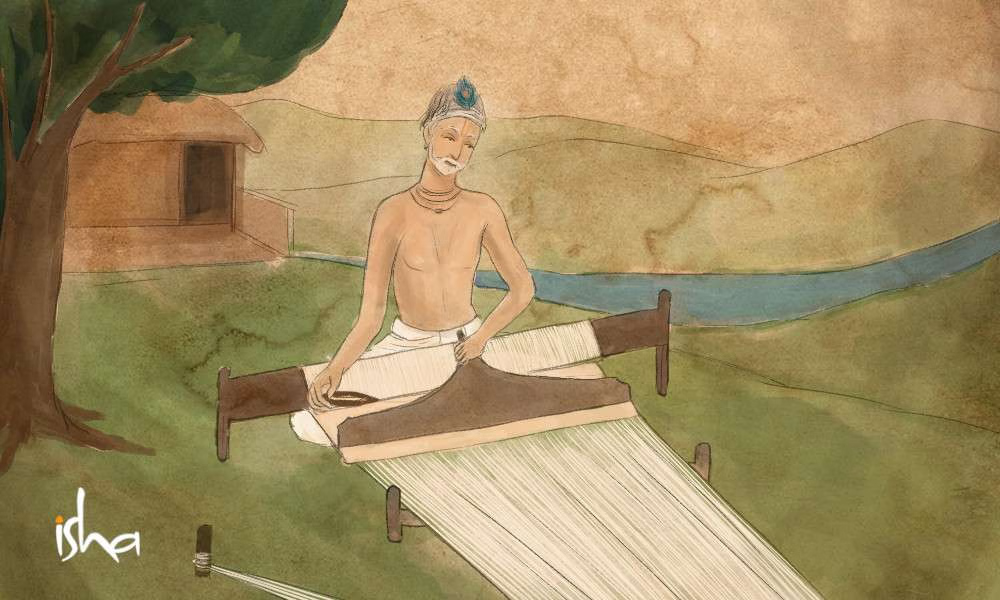
Embracing the Wholeness of Existence
In the profound words of Kabir, "Look upon life and death; there is no separation between them," we are invited to contemplate the intricate relationship between existence and non-existence. This statement challenges our conventional understanding of life as a distinct entity, separate from the inevitable reality of death. By urging us to perceive life and death as intertwined, Kabir beckons us to explore the depth of our experiences and the unity that underlies all phenomena. This perspective is not merely philosophical; it holds the potential to transform our understanding of existence itself.
As we delve deeper into this quote, we recognize that it speaks to a fundamental truth about the human condition. The fear of death often colors our experience of life, leading us to cling to the ephemeral and resist the natural cycles of existence. Kabir's invitation to see life and death as one encourages us to embrace the totality of our experiences, fostering a sense of peace and acceptance. In this light, we can begin to appreciate the beauty of life in its entirety, understanding that every moment is enriched by the awareness of its impermanence.
The image / the metaphor
At first glance, Kabir's words evoke a vivid image of the cyclical nature of existence. The act of "looking upon" life and death suggests a contemplative gaze, one that invites us to observe rather than judge. The choice of the word "look" implies an active engagement with our reality, urging us to confront the truths we often shy away from. The juxtaposition of life and death serves as a powerful metaphor for the dualities that permeate our existence, highlighting the interconnectedness of joy and sorrow, creation and dissolution.
Diving deeper into the metaphor, we can see that Kabir's statement transcends the mere acknowledgment of life and death. It speaks to the essence of unity, suggesting that the boundaries we draw between experiences are often illusory. In recognizing that life and death are not opposing forces but rather two sides of the same coin, we can cultivate a more profound understanding of our place in the universe. This perspective invites us to embrace the fullness of our experiences, allowing us to find meaning even in moments of loss and transition.
In the speaker's tradition
Kabir's teachings are rooted in the bhakti tradition, which emphasizes devotion and the personal experience of the divine. Central to this tradition is the concept of unity, or "advaita," which posits that all beings are interconnected and that the divine permeates all aspects of existence. This understanding aligns with the idea of "fana," or the annihilation of the self, where the individual ego dissolves into the greater whole. Kabir's assertion that life and death are inseparable reflects this profound realization of oneness, inviting us to transcend the dualities that often define our perceptions.
In the context of bhakti literature, we can draw parallels to the teachings found in the "Bhagavad Gita," where the nature of the self and the eternal cycle of life and death are explored. In Chapter 2, Krishna imparts wisdom about the immortality of the soul, emphasizing that the physical body is transient while the essence of being remains eternal. This echoes Kabir's message, as both texts encourage us to look beyond the surface of existence and recognize the deeper truths that bind us all together.
Living the teaching
Consider a modern scenario where this teaching resonates deeply: the experience of losing a loved one. In the face of grief, we often feel a profound separation between life and death, as if the loss has created an insurmountable chasm. However, if we embrace Kabir's perspective, we can begin to see that the essence of our loved ones continues to exist within us, in our memories, and in the love we shared. This understanding can transform our grief into a celebration of life, allowing us to honor those who have passed while recognizing the ongoing cycle of existence.
Another application of this teaching can be found in our daily relationships. When conflicts arise, we may perceive them as threats to our connections, leading us to react with fear or defensiveness. By applying Kabir's wisdom, we can approach these moments with a sense of unity, recognizing that the challenges we face are part of the ebb and flow of our shared human experience. This perspective encourages us to engage with compassion and understanding, fostering deeper connections and allowing us to navigate the complexities of relationships with grace.
A reflection
As we contemplate Kabir's profound insight, we are left with a contemplative question: How might our lives change if we fully embraced the interconnectedness of life and death? In what ways can we cultivate a deeper awareness of this unity in our daily experiences? By reflecting on these questions, we can begin to shift our perceptions, allowing the wisdom of Kabir to guide us toward a more harmonious existence, where we honor both the joys and sorrows that shape our journey.




Join the BrightStar Community
Stay connected with daily inspiration, event announcements, and community wisdom