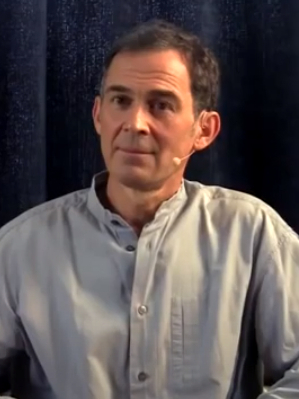
Seeing Through the Lens of Awareness
Rupert Spira's profound assertion, "What you are looking for is what you are looking with," invites us to reconsider the very nature of our seeking. At its core, this statement suggests that the essence of our search for meaning, fulfillment, or enlightenment is intrinsically linked to the awareness through which we perceive our experiences. This realization is not merely an intellectual exercise; it has the potential to transform our understanding of existence and our place within it. Recognizing that the seeker and the sought are not separate can lead to a deeper sense of peace and clarity.
In a world often characterized by a relentless pursuit of external validation and material success, Spira's words serve as a gentle reminder of the importance of turning inward. The quest for happiness, love, or spiritual awakening is frequently misdirected, as we look outside ourselves for answers that reside within. By acknowledging that what we seek is already present in our awareness, we can cultivate a more profound connection to our true nature, fostering a sense of wholeness that transcends the transient nature of worldly pursuits.
The image / the metaphor
The imagery embedded in Spira's quote evokes a sense of unity between the seeker and the sought. The verbs "looking for" and "looking with" suggest an active engagement with our inner landscape, where awareness becomes both the lens and the light illuminating our path. This duality emphasizes that our perception shapes our experience; the quality of our awareness directly influences what we find. When we approach life with a sense of openness and curiosity, we are more likely to uncover the richness of our existence.
Diving deeper into this metaphor, we can see that the act of looking is not merely about seeking answers but about cultivating a relationship with our own consciousness. The phrase "looking with" implies a gentle, nurturing quality, as if we are invited to explore our inner world with compassion and understanding. This perspective encourages us to recognize that our awareness is not a passive observer but an active participant in the unfolding of our lives. By shifting our focus from the external to the internal, we can begin to appreciate the profound interconnectedness of all experiences.
In the speaker's tradition
Rupert Spira's teachings are deeply rooted in the non-dual tradition, which emphasizes the fundamental unity of all existence. Concepts such as *advaita* (non-duality) and *sunyata* (emptiness) resonate with the essence of Spira's message. In this context, the idea that the seeker and the sought are one reflects the understanding that our true nature is not separate from the universe around us. This realization invites us to dissolve the boundaries of the self and embrace the interconnectedness of all beings.
A relevant text that echoes this sentiment is the *Upanishads*, which articulate the idea that the individual self (Atman) is ultimately identical to the universal consciousness (Brahman). This ancient wisdom aligns with Spira's assertion, suggesting that our search for meaning is, in essence, a journey back to our true selves. By recognizing that our awareness is the very fabric of existence, we can cultivate a deeper understanding of our place within the cosmos and the inherent unity of all life.
Living the teaching
Consider a modern scenario where this teaching can be applied: a person grappling with feelings of inadequacy in their career. They may find themselves constantly seeking external validation through promotions or accolades, believing that these achievements will bring them fulfillment. However, by internalizing Spira's message, they can begin to recognize that their worth is not contingent upon external success but rather rooted in their inherent awareness and presence. This shift in perspective allows them to approach their work with greater authenticity and joy, freeing them from the shackles of comparison and self-doubt.
A reflection
As we contemplate the depth of Spira's quote, we are invited to ask ourselves: "In what ways am I seeking outside of myself for what is already present within?" This question encourages us to explore the layers of our awareness and recognize the innate wisdom that resides in each of us. By turning our gaze inward, we can begin to uncover the richness of our true nature and the profound interconnectedness of all existence, ultimately leading us to a more fulfilling and authentic life.




Join the BrightStar Community
Stay connected with daily inspiration, event announcements, and community wisdom