Discovering the Unchanging Self Amidst Life's Flux
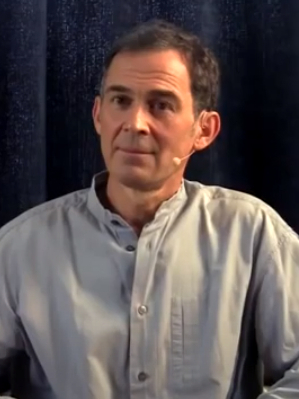
Rupert Spira invites us to embark on a profound journey of self-inquiry with his poignant assertion: "Find the 'I' that is the same in all your experiences." This call to action urges us to delve beneath the surface of our ever-changing thoughts, emotions, and circumstances to uncover a deeper, unchanging essence of our being. In a world characterized by constant flux, this exploration is not merely philosophical; it is essential for cultivating a sense of inner peace and authenticity.
As we navigate the complexities of life, we often identify ourselves with transient experiences—our roles, achievements, and even our struggles. Yet, Spira's invitation challenges us to recognize a more profound identity that transcends these ephemeral aspects. By engaging in this inquiry, we can cultivate a sense of constancy and connection that anchors us amidst the storms of existence, allowing us to respond to life with greater clarity and compassion.
The image / the metaphor
The quote evokes a powerful image of the self as a river, flowing through various landscapes yet retaining its essence. The 'I' that Spira speaks of is not a fixed entity but rather a continuous thread that weaves through the tapestry of our experiences. This notion of constancy amidst change resonates deeply, suggesting that while our thoughts and feelings may shift like the currents of a river, there exists a core self that remains unchanged, a witness to all that unfolds.
In the speaker's tradition
Rupert Spira's teachings are rooted in the non-dual tradition, which emphasizes the interconnectedness of all existence and the illusion of separateness. Concepts such as *advaita* (non-duality) and *sunyata* (emptiness) resonate with the essence of Spira's message, inviting us to see beyond the dualistic perceptions that often confine our understanding of self. In this context, the inquiry into the 'I' becomes a pathway to realizing our inherent unity with all that is, transcending the limitations of individual identity.
In the *Upanishads*, ancient texts that explore the nature of reality and self, we find echoes of this inquiry. The phrase "Tat Tvam Asi," meaning "That Thou Art," encapsulates the essence of non-dual awareness, suggesting that our true nature is not separate from the divine or the universe. By recognizing the 'I' that is the same in all experiences, we align ourselves with this timeless wisdom, awakening to the realization that we are not merely isolated beings but integral parts of a greater whole.
Living the teaching
Consider a modern scenario where this teaching can be applied: a challenging day at work filled with stress and conflict. In such moments, we may find ourselves identifying strongly with our frustrations, feeling overwhelmed by the weight of our responsibilities. However, by turning inward and seeking the 'I' that remains constant amidst these experiences, we can cultivate a sense of detachment from the turmoil, allowing us to respond with clarity rather than react impulsively. This practice of self-inquiry can transform our relationship with stress, enabling us to navigate challenges with grace.
In the realm of relationships, the teaching takes on another dimension. During a disagreement with a loved one, it is easy to become entangled in the emotions of anger or hurt, losing sight of our shared humanity. By remembering to seek the unchanging 'I' within ourselves and our partner, we can foster empathy and understanding, recognizing that beneath the surface of our differences lies a common essence. This perspective not only deepens our connections but also nurtures a sense of compassion that transcends the immediate conflict.
A reflection
As we contemplate Spira's invitation to find the 'I' that is the same in all our experiences, we are called to engage in a profound inquiry into our own identity. What does it mean for you to discover this unchanging essence within the ever-shifting landscape of your life? In moments of joy, sorrow, triumph, or defeat, how can you connect with the deeper 'I' that witnesses all? This reflection invites us to explore the depths of our being and to cultivate a sense of presence that transcends the transient nature of our experiences.



Join the BrightStar Community
Stay connected with daily inspiration, event announcements, and community wisdom