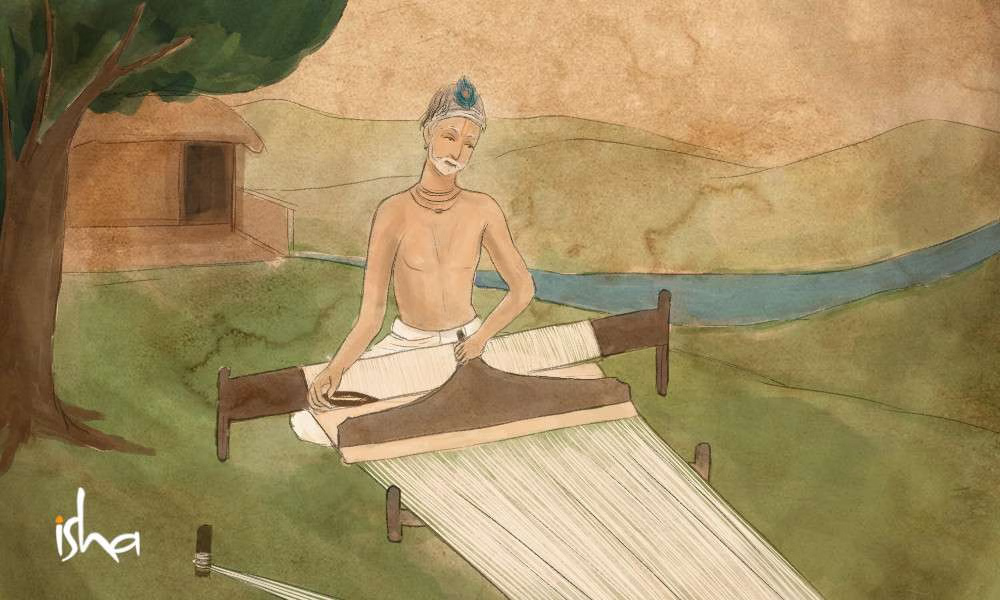
Voices of Silence: The Quest for True Connection
In the poignant words of Kabir, “The images are all lifeless, they cannot speak; I know, for I have cried aloud to them.” This declaration encapsulates a profound disillusionment with the superficiality of idol worship and the yearning for a deeper, more authentic connection with the divine. Kabir's lament serves as a reminder that mere symbols and representations, devoid of life and spirit, cannot fulfill our deepest spiritual needs. In a world often captivated by the allure of external forms, this quote invites us to reflect on the essence of true devotion and the nature of our spiritual pursuits.
As we delve into Kabir's insight, we are beckoned to consider the implications of our attachments to images and idols. The lifelessness he describes is not merely a critique of physical representations but a call to awaken to the living truth that lies beyond them. This exploration is particularly relevant in contemporary spiritual practice, where the risk of idolatry—whether of objects, beliefs, or even teachers—remains ever-present. Kabir's words challenge us to seek a direct and unmediated experience of the divine, urging us to move beyond the confines of our own constructs and to engage with the sacred in a more profound and personal manner.
The image / the metaphor
At first glance, Kabir's statement evokes a stark imagery of lifelessness, where the “images” symbolize the idols and symbols that people often turn to in their spiritual journeys. The choice of the verb “cry” is particularly striking; it conveys a sense of desperation and longing, suggesting that the speaker has reached out to these images in search of solace or understanding, only to find silence in return. This vivid metaphor highlights the futility of seeking meaning in objects that lack the capacity for communication or connection, emphasizing the need for a more dynamic relationship with the divine.
Delving deeper into the metaphor, we can see that Kabir is not merely lamenting the absence of life in these images; he is also pointing to the inherent limitations of external forms in conveying spiritual truth. The lifelessness of the images serves as a mirror reflecting our own spiritual stagnation when we rely solely on external symbols rather than cultivating an inner awareness. This metaphor invites us to confront our own practices and beliefs, urging us to question whether we are engaging with the divine in a way that is truly alive and transformative.
In the speaker's tradition
Kabir's perspective is deeply rooted in the bhakti tradition, which emphasizes personal devotion and a direct relationship with the divine. Central to this tradition is the concept of bhakti itself, which encourages practitioners to cultivate love and devotion that transcends ritualistic practices and external forms. Kabir's critique of lifeless images resonates with the idea of kenosis, or self-emptying, where one must relinquish attachments to superficial representations in order to experience the fullness of divine love. This journey toward authenticity is echoed in the teachings of other bhakti poets, who similarly sought to dismantle the barriers between the seeker and the sought.
In the context of Kabir's work, we can draw parallels to the concept of sunyata, or emptiness, found in Buddhist thought. Just as sunyata invites practitioners to recognize the emptiness of all forms and concepts, Kabir's words challenge us to see beyond the idols we create. The essence of his message aligns with the teachings of the Bhagavad Gita, where Krishna emphasizes the importance of inner realization over external rituals. In both traditions, the call is clear: true spiritual fulfillment arises not from the worship of lifeless forms but from the awakening of the heart and mind to the living presence of the divine.
Living the teaching
Consider a modern scenario where an individual finds themselves drawn to a particular spiritual practice, perhaps attending a temple or engaging in rituals that feel comforting yet ultimately unfulfilling. In this context, Kabir's teaching resonates profoundly. The individual may realize that despite their dedication to these practices, they still feel a sense of emptiness or disconnection. This moment of recognition can serve as a catalyst for deeper inquiry, prompting them to explore what it means to cultivate a genuine relationship with the divine that transcends mere rituals and images.
In a different application, imagine a relationship where one partner feels increasingly distant, despite the presence of shared symbols of love—gifts, anniversaries, and rituals. Kabir's insight can illuminate this dynamic, suggesting that the lifelessness of these symbols may mask a deeper disconnect. By engaging in open and honest communication, the partners can move beyond the superficiality of their shared images and strive for a more authentic connection. This process of seeking truth in relationships mirrors Kabir's call to seek the living essence of the divine, reminding us that true connection requires vulnerability and a willingness to engage with the depths of our experiences.
A reflection
As we contemplate Kabir's poignant words, we are invited to ask ourselves: In what ways do I cling to lifeless images or symbols in my spiritual practice? This question encourages us to reflect on our own spiritual journeys and to consider whether we are engaging with the divine in a way that is truly alive and transformative. By examining our attachments and seeking a more direct experience of the sacred, we can begin to cultivate a deeper, more meaningful relationship with the divine that transcends the limitations of form.



Join the BrightStar Community
Stay connected with daily inspiration, event announcements, and community wisdom